


Fish Species in Our Lakes
Our fishing lakes are home to a variety of fish species. Some may be taken home, while others must always be released back into the water.
Fish You Can Keep
Please remember to follow the catch limit stated on your fishing permit.
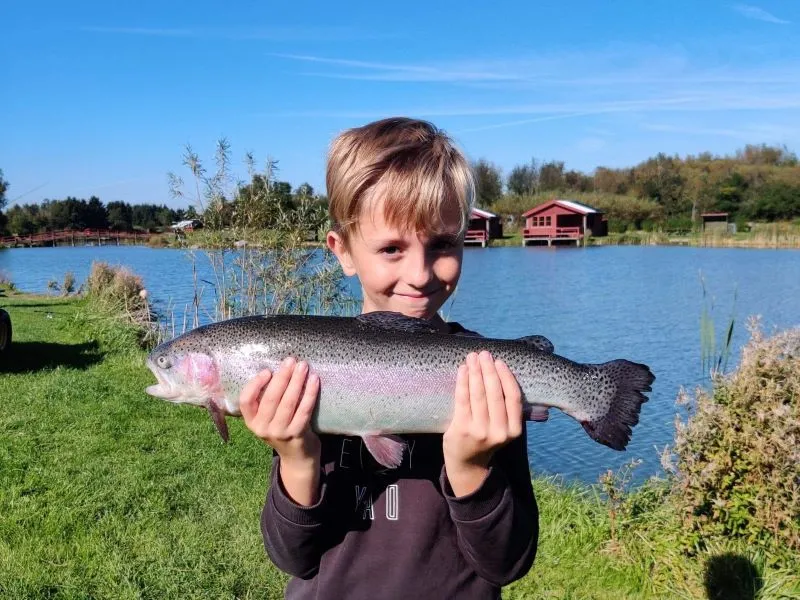
Rainbow Trout
Rainbow trout are the most common trout in our lakes and are popular for eating. We mainly stock fish weighing 1–2 kg, but some can reach approximately 5 kg.
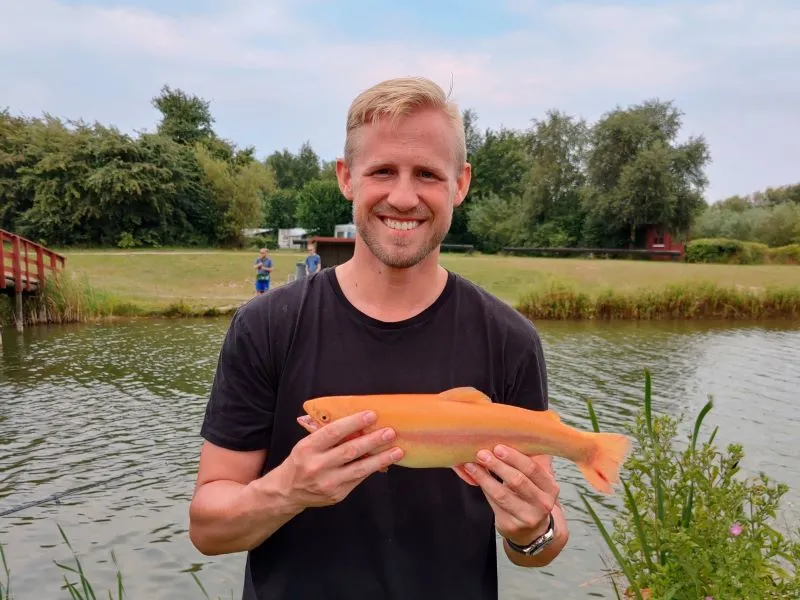
Golden Trout
Golden trout are farmed in Denmark and are also excellent eating fish. We mainly stock fish weighing approximately 1–2 kg.
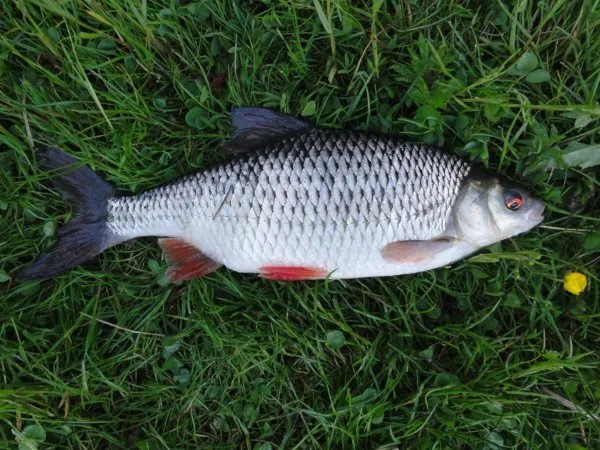
Roach
Roach have shiny silver scales and distinctive reddish eyes. They are typically caught using a float, a small single hook and sweetcorn or earthworms.
A great fish for children, as they are relatively easy to catch.
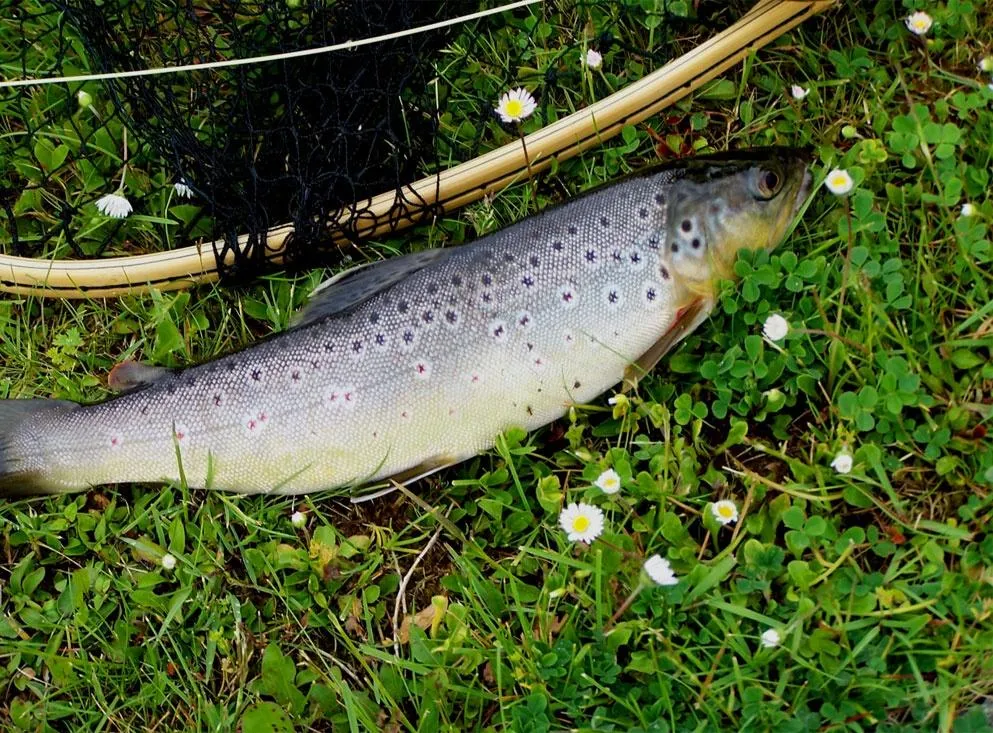
Brown Trout
Brown trout are native to Denmark and develop their distinctive markings under suitable living conditions. We stock them several times a year.

Brook Trout
Brook trout are rare in the wild in Denmark. They are shy fish and are often caught using fly-fishing techniques. They typically weigh 1–4 kg and are stocked several times a year.
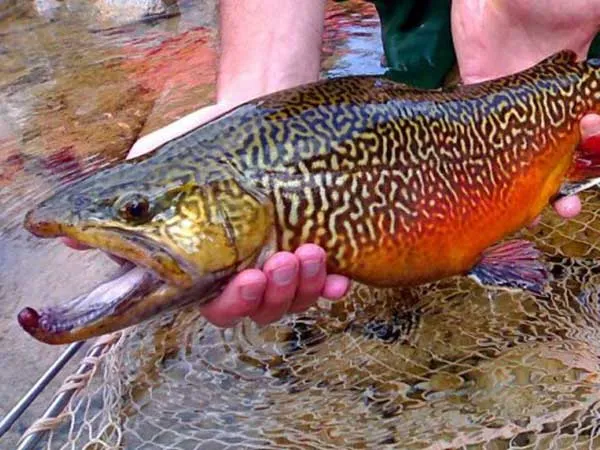
Tiger Trout
Tiger trout are a hybrid of brown trout and brook trout. They can be caught using spinners, spoons, flies and lures. We stock them several times a year.

Brødding (Char Hybrid)
Brødding are closely related to brook trout and require good water quality. They are often caught using fly-fishing techniques and typically weigh 1–4 kg. We stock them several times a year.
Different fish species are stocked depending on the season, so not all species are regularly available throughout the year.
Fish You Must Release
These fish must be handled carefully and released immediately after being caught.

Grass Carp
Grass carp mainly feed on plants and help control aquatic vegetation in the lakes. They are greyish in colour and have large scales.
All grass carp must be released immediately after being caught.
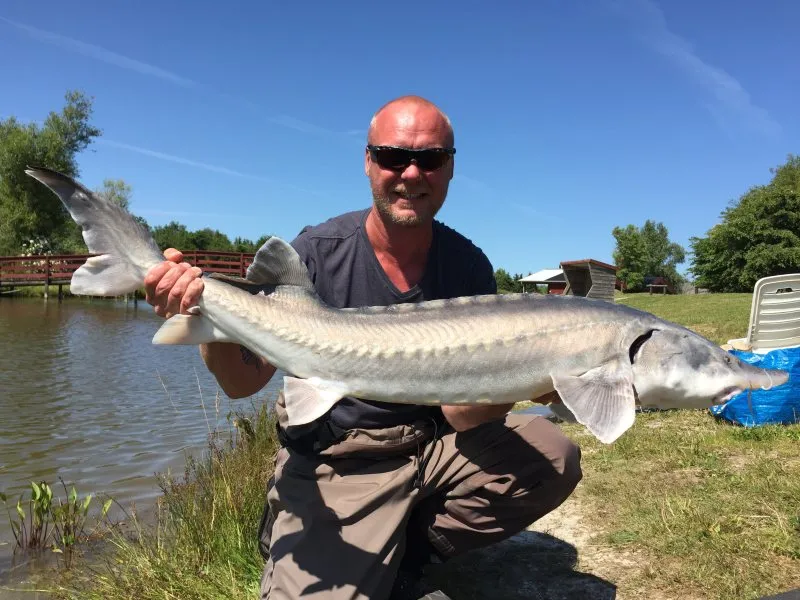
Beluga Sturgeon
Beluga sturgeon are impressive and extremely powerful fish. All our beluga sturgeon are male and therefore do not produce roe or caviar. Some weigh over 80 kg.
All beluga sturgeon must be released immediately after being caught.
Sturgeon Fishing Rules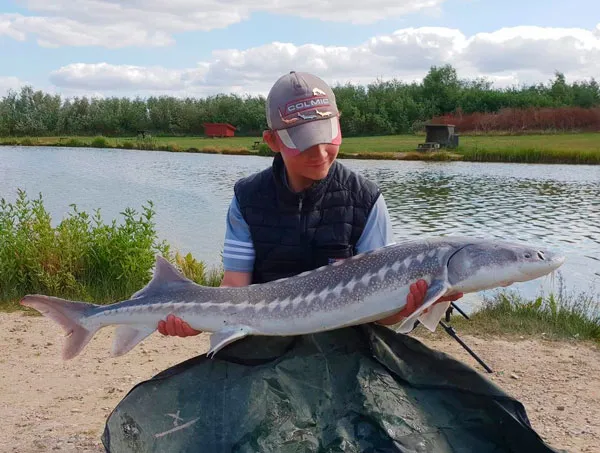
White Sturgeon
White sturgeon have an elongated body, a long tail fin and distinctive bony plates along their sides and back. Long barbels are found in front of their mouth.
All sturgeon must be released immediately after being caught.
Sturgeon Fishing Rules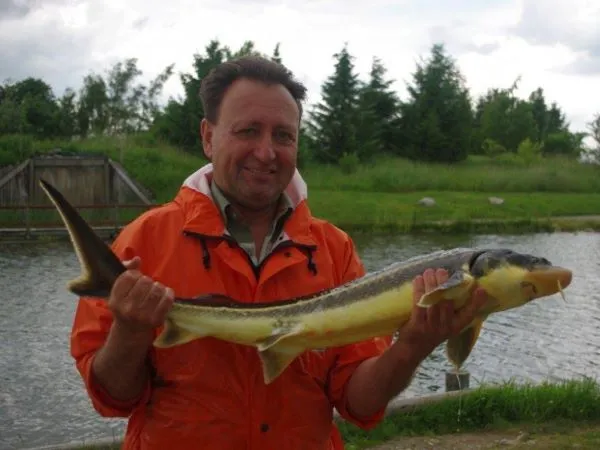
Russian Sturgeon
Russian sturgeon have a short, rounded snout and four barbels in front of their mouth. Their back is dark grey-green or brown, while the underside is lighter.
All sturgeon must be released immediately after being caught.
Sturgeon Fishing Rules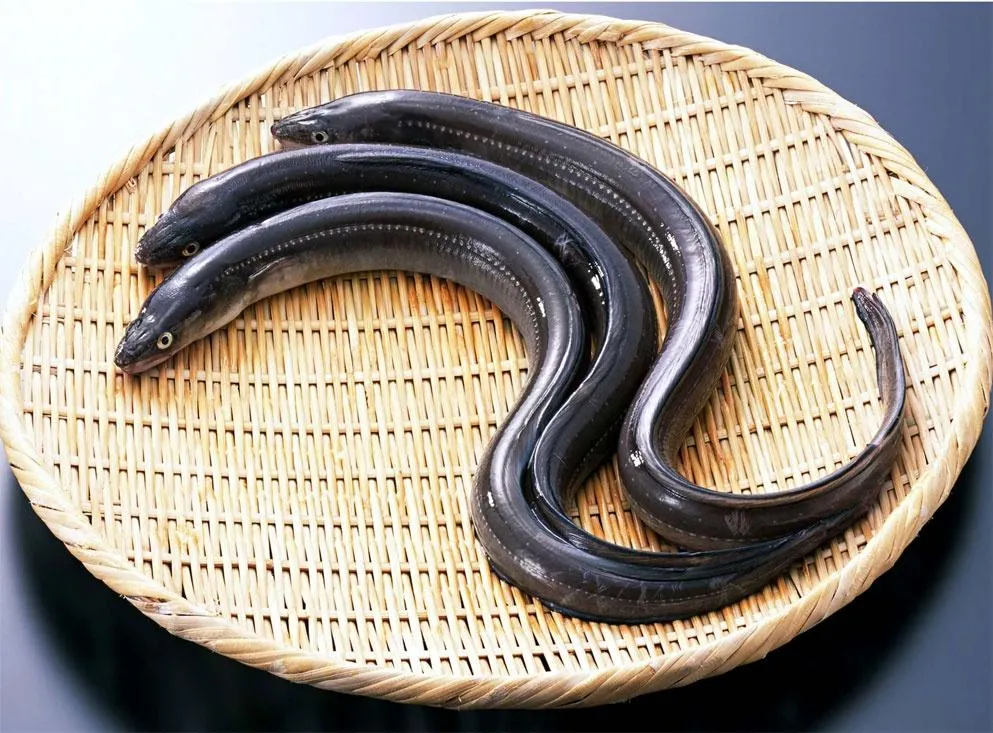
European Eel
Eels have a long, slender body. Their dorsal, tail and anal fins form one continuous fin. Their colour ranges from dark green and brown to almost black.
All eels must be released immediately after being caught.

European Perch
Perch occur naturally in many Danish lakes. They have a deep body, dark vertical stripes and reddish pelvic and anal fins.
All perch must be released immediately after being caught.

Crucian Carp
Crucian carp have a brownish-green, deep body with relatively large scales. They do not normally grow very long.
All crucian carp must be released immediately after being caught.
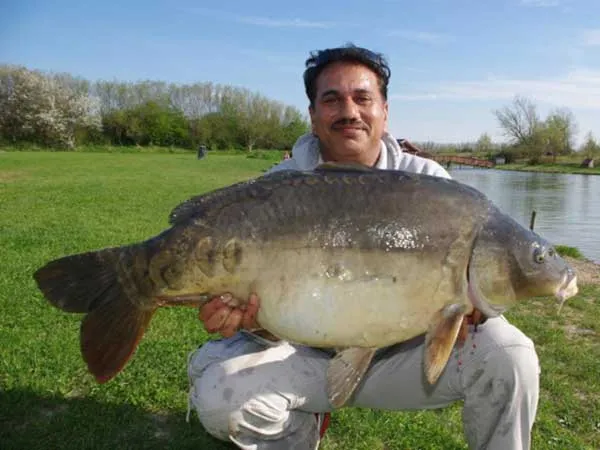
Mirror Carp
Mirror carp have few or no scales, apart from occasional large scales. Carp can also be identified by the barbels at the corners of their mouth and their strong body.
All mirror carp must be released.

Northern Pike
Pike have a large head with many sharp teeth and an elongated body. Their base colour is green with yellowish markings.
Pike weighing less than 1 kg must be released immediately after being caught.
Please note: Different fish species are stocked depending on the season, so not all species are regularly available throughout the year.
Please Read Our Fishing Rules
Find all the important rules about fishing permits, catch limits and the correct handling of sturgeon.
All Fishing Rules